
Most people measure financial progress by one number: their income.
Did the salary go up? Did the savings balance grow? If yes things are moving in the right direction.
But there's a number that matters more than either of those. And most people never look at it.
It's called purchasing power. And quietly, consistently, it tells a more honest story about where your money actually stands.
Purchasing power is simple in theory. It's what your money can actually buy.
Not the number in your account. Not your monthly salary. But the real-world value of that money how much of everyday life it can cover.
And the reason it matters is this: that real-world value changes over time, even when the number doesn't.
Think about it this way. If you had €1,000 ten years ago and you still have €1,000 today, your balance hasn't moved. But what that €1,000 can buy groceries, rent, fuel, services costs noticeably more than it did a decade ago. So in real terms, your money has become worth less. Not because you spent it. Because the world around it changed.
That's purchasing power. And once you understand it, you start seeing money differently.
This is the part that surprises people.
You got a raise. Your income went up by 4% this year. On paper, that's a win.
But if inflation the rate at which prices increase across the economy also ran at 3% or higher that same year, your real gain was much smaller than it looked. In some cases, depending on what you spend money on, you may barely be ahead at all.
This is called real income versus nominal income. Nominal income is the number. Real income is what that number can actually do after accounting for rising prices.
Most people track nominal. Almost nobody tracks real. And that gap is where the confusion lives the feeling that you're earning more but somehow not getting further ahead.
Here's where it gets personal.
Money sitting in a standard bank account earns very little often close to zero in real terms after fees and taxes. Meanwhile, prices keep rising. Services cost more. Housing costs more. Everyday expenses drift upward year after year.
The result is that money doing nothing loses purchasing power quietly, without any single dramatic moment. There's no alarm. No notification. Just a slow, steady erosion that most people only notice years later when they look back and wonder where the value went.
At an average inflation rate of around 2–3% annually which reflects the current environment across the Eurozone and UK €10,000 sitting still loses roughly €1,800 to €2,700 in real purchasing power over ten years. The number on screen stays the same. The reality behind it doesn't.
You can see exactly what this looks like for your own savings using the Quasar Inflation Calculator enter your numbers and see the real impact clearly.
Understanding purchasing power changes how you think about financial decisions.
It reframes saving not as the finish line, but as the starting point. Saving money is essential it provides security, flexibility, and options. But saving alone, in the absence of any strategy to protect or grow that money's real value, means watching its purchasing power gradually decline.
The people who build genuine financial stability over time aren't necessarily the highest earners. They're the ones who understand that money needs to be working not just sitting in order to maintain and grow its real value.
This isn't about taking risks. It's about understanding the environment your money exists in, and making sure your approach matches it.
The first step is making it visible. Most people feel the effects of declining purchasing power without being able to name or measure it. Once you can see it clearly in your own numbers, over your own timeframe it becomes something you can act on.
The second step is putting your money in a position where it has the opportunity to maintain or grow its real value over time, rather than quietly losing ground while sitting still.
That's exactly what Quasar is built for. It's a software that connects to your own personal broker account an account that stays in your name, under your control, at all times. Quasar runs its automated strategy through that account, handling all the complexity in the background, while you retain full visibility of everything happening with your money. No financial background required. No one else holds your capital. You keep the control and the clarity.
Quasar is a fintech software that uses automated strategies to help everyday people protect and grow their capital — without requiring any knowledge of trading or financial markets.Learn more about Quasar | Try the Inflation Calculator | Get Started Free

Official inflation figures look modest. But for working professionals across Europe, the real cost of keeping money idle is significantly higher than the headline number suggests. Here's what most people miss.
Read More....png)
Most people think keeping money in the bank is safe. But inflation quietly erodes your purchasing power every year. Here's what's really happening and how Quasar helps.
Read More...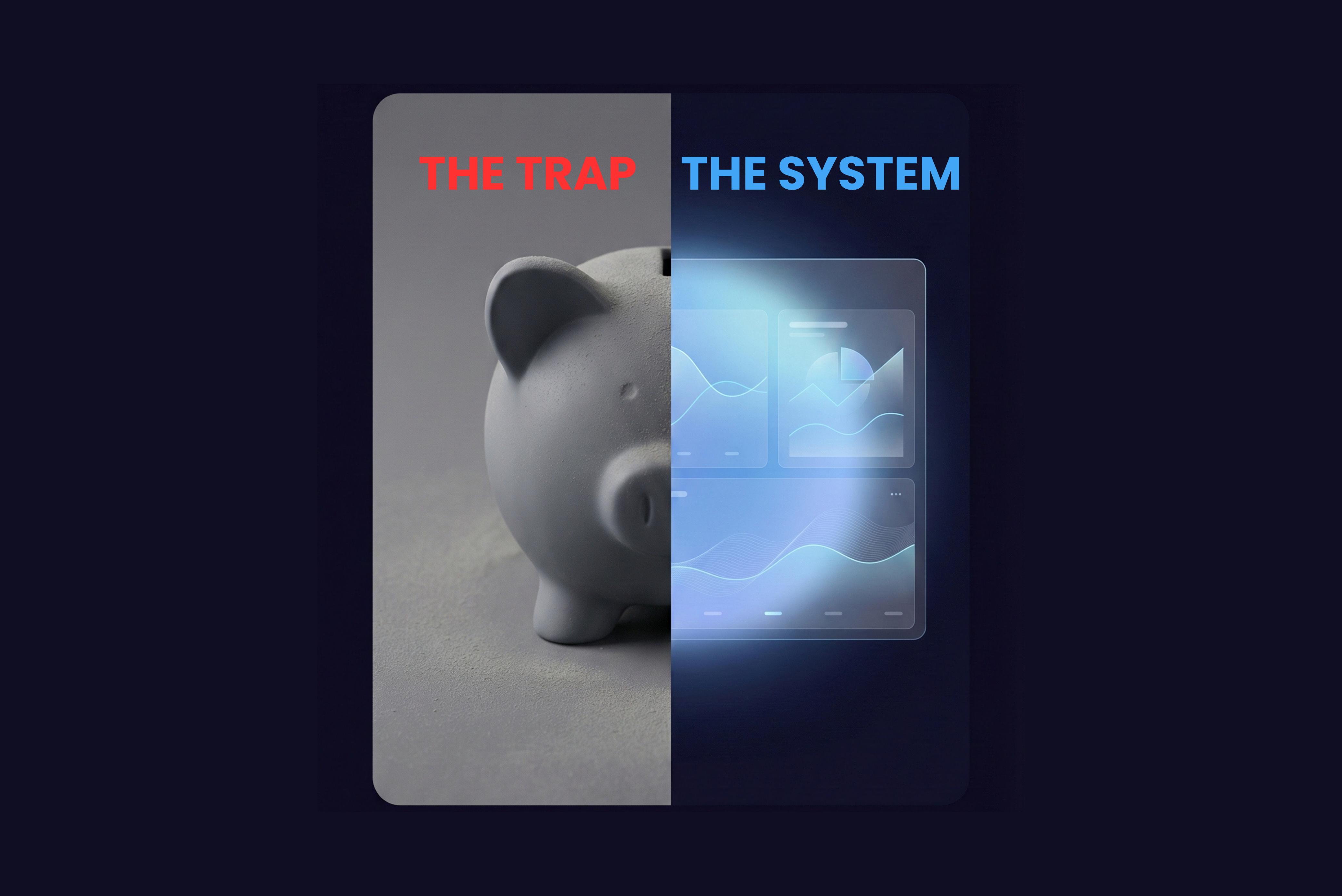
Quasar closed January 2026 with a verified net profit of +4.76%. Here's the full breakdown what happened, how it compares to savings accounts, and what the cumulative track record now shows.
Read More...



